
Performance Management – MCQs
Q.1. Which of the following terms refers to the process of evaluating an employee’s current
and/or past performance relative to his or her performance standards?
a) Recruitment ...

Performance Appraisal – MCQs with answers
1. “The person who was a good performer in distant past is assured to be okay at present also”. This is an example of ________________ bias in Performance Appraisal
(adsbygoogle ...

What are the Benefits of Skip Level Meetings?
Skip Level Meetings provide a way for employers and employees to interact and get to to know each other.
Beyond this, skip level meetings can be very helpful when moving into a leadership, ...

How does a Skip-Level Meeting work?
The key to achieving the round table objectives is process
(adsbygoogle = window.adsbygoogle || []).push({});
The method of gathering the feedback, creating action plans ...

Skip-Level Meeting
(adsbygoogle = window.adsbygoogle || []).push({});
A Skip-Level Meeting is a meeting between managers and team members who are at least two levels below them.
The purpose ...

Demotion
Demotion, though not good for the incumbent or for the organization, but is practiced as an option for restructuring employees or for giving punishment to the employee.
A demotion ...

Functions of HRM
Human resource function refers to those tasks and duties performed in both large and small organization to provide for and co ordinate human resources. Human resource function are concerned ...
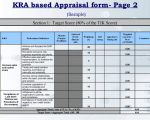
7 steps to help write employee Goals
1. Identify the appropriate Organization KPIs where the employee can contribute meaningfully. It is important to note that all KPIs are not applicable to each employee.
2. Document ...

Resignation
Resignation is the voluntary separation of an employee from the organization.– Wendell French (1997:262).
(adsbygoogle = window.adsbygoogle || []).push({});
Resignation ...
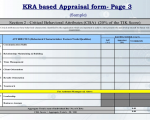
Difference between a KRA and a KPI
A key result area (KRA) is an strategic factor either internal to the organization or external, where strong positive results must be realized for the organization to achieve its strategic ...